Clopay Garage Door Repair in University Park: A Homeowner’s Guide
Clopay is the most installed door brand in U.S. residential construction, which means it’s also the brand most frequently “repaired” by technicians who’ve never read a Clopay installation spec. And the tolerances on their steel and composite panel systems are tighter than most generic repair approaches account for. If your door is dragging, binding, or sitting crooked, the fix usually isn’t a bigger hammer and a fresh set of hinges – it’s knowing which Clopay line you actually own.
This guide breaks down what makes Clopay doors different, how to read your own door’s label, and where a targeted repair beats a replacement every time. If you’d rather not climb around with a flashlight and a tape measure, call us at (844) 524-3396 and we’ll take a look.
Why Clopay Doors Are So Common in University Park
Clopay’s biggest market share comes from new construction. Builders specify Clopay because the doors are cost-effective at scale, come in standard opening sizes, and offer a wide range of style options without custom lead times. That’s why you’ll find Clopay doors on so many homes in University Park – from newer builds to homes that were re-sided, renovated, or had their doors replaced during an upgrade.
The upside for homeowners is real: parts are widely available, and most Clopay lines are well understood by anyone who takes the time to learn them. The downside is that a lot of repair techs treat every Clopay door the same. They don’t.
Here’s what changes the repair approach:
- Panel construction. Clopay’s residential lines include steel panels, composite overlay panels, and insulated panels with structural cores – and each one fails in a different way.
- Hardware compatibility. The hinges, rollers, and bottom brackets on a given Clopay model are matched to that model’s weight and panel profile. Swapping in generic parts can work short-term and cause problems later.
- Seal profiles. Clopay uses specific bottom-seal and weatherstrip shapes. Generic substitutes don’t seat the same way, and over time they let the door drift out of alignment.
In University Park, where temperature swings between seasons are wide, that alignment drift shows up faster than in milder climates. Rubber and vinyl seals expand and contract with the temperature, and a seal that isn’t the right profile for your door moves in ways the door wasn’t designed to accommodate.
Model Builder, Gallery, and Coachman: What’s Actually Different
These three Clopay lines are among the most common on University Park homes, and they differ structurally in ways that matter at repair time.
Model Builder series. These are the entry-level doors builders install in volume – non-insulated or lightly insulated steel panels, with a straightforward hinge-and-roller setup. Repairs are usually simpler because there’s less to go wrong, but the panels are lighter and more prone to denting. Replacing a single panel is common, and the challenge is matching the panel profile and color so it lines up with the rest of the door.
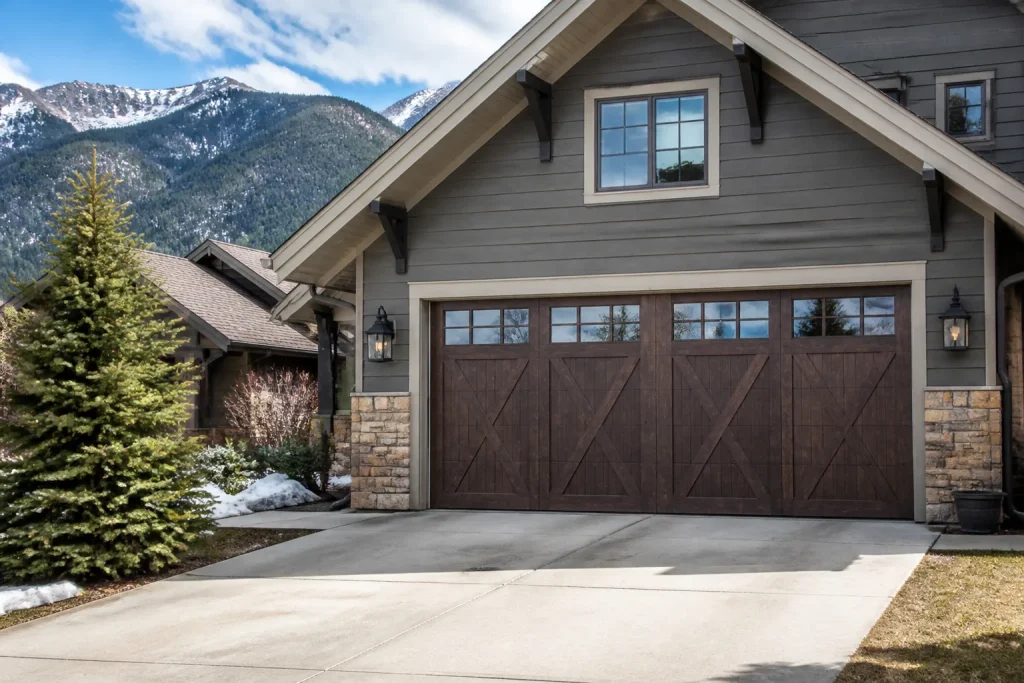
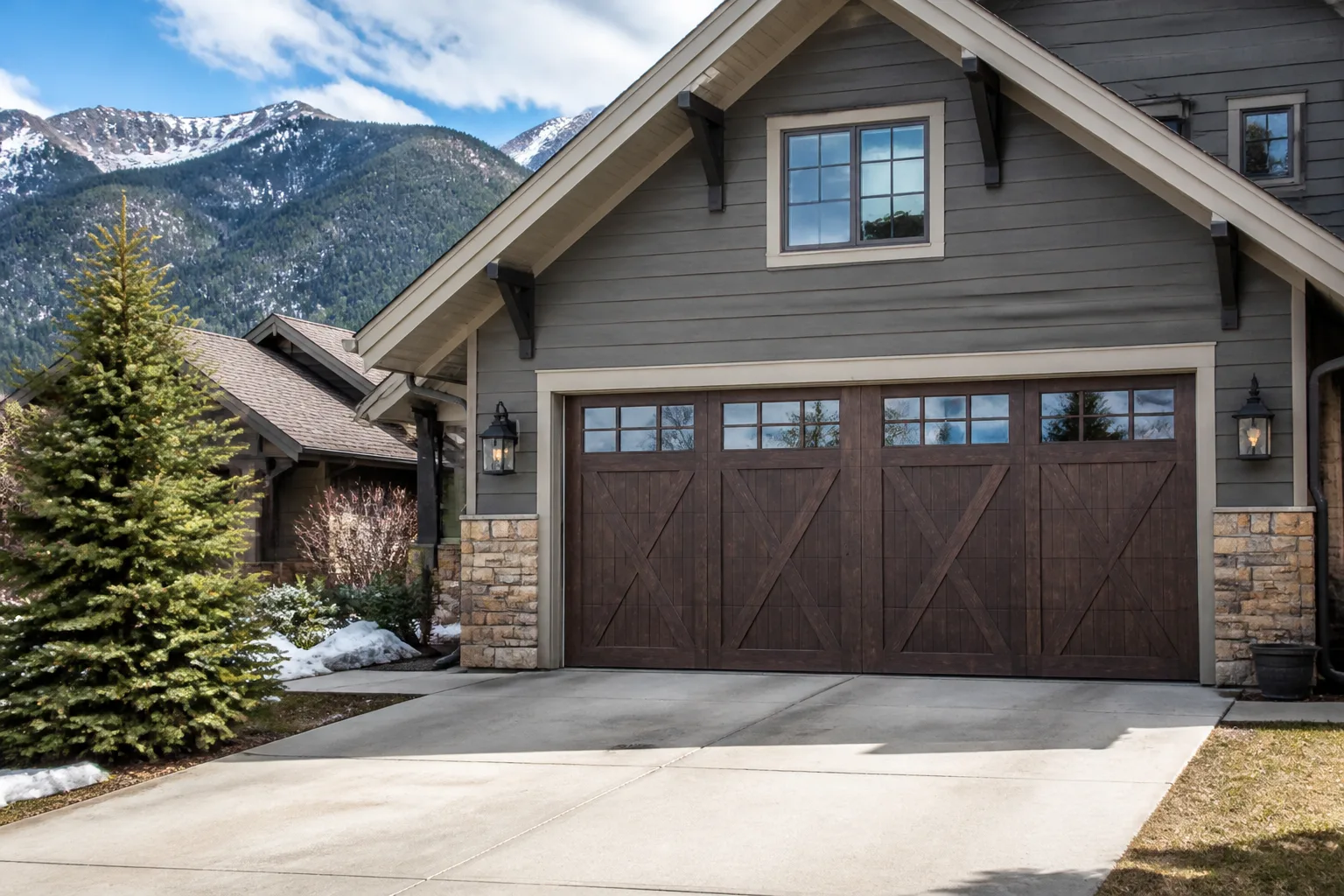
Gallery series. Gallery doors are a step up in style, often with carriage-house looks and decorative hardware. The panels on these doors are designed to look like wood carriage doors while being steel underneath. That means the panel face isn’t flat, and replacing one requires matching the exact decorative profile. We’ve seen doors where a generic panel was swapped in and the result was visible from the street.
Coachman series. Coachman lines use a different panel configuration with insulated cores on many models. The structural core is what makes panel-swap logic break down – you can’t just pop out a damaged skin and expect the door to hold its shape. The core carries load, and a repair that ignores it can leave you with a door that looks fixed and sags within a season.
Knowing which line you have before you start is the single biggest shortcut in a Clopay repair. Our technicians have up to 11 years of experience, and knowing the model line before we arrive is how we get the right part on the first visit.
ProCore Insulation and Why Standard Panel-Swap Logic Breaks Down
Clopay’s ProCore insulated panels use a structural core bonded between two steel skins. That construction is what gives the door its rigidity and its insulation value – and it’s also what makes panel replacement more involved than it looks.
A standard panel replacement assumes the panel skin can be detached and replaced independently of the structure underneath. On a non-insulated door, that’s often true. On a ProCore door, the core is part of the panel’s structural integrity. If the core is intact but the skin is damaged, the repair is different from a case where the core itself is compromised. If the core is compromised, the panel needs to be replaced as a unit – and the matching challenges are real.
Here’s the short version of what a technician needs to check:
- Is the damage to the outer skin only, or does it involve the core?
- Is the panel still square and flat, or has it warped?
- Do the hinges and rollers on that panel still align with the track?
- Does the replacement panel match the profile, thickness, and color of the original?
If you skip those questions and just replace the skin, you risk a panel that doesn’t sit flush with its neighbors, which causes binding in the track and early wear on the hinges. In University Park’s temperature swings, a panel that isn’t quite right announces itself within a few weeks. If you’re dealing with a bent or damaged panel and want a proper diagnosis, our garage door repair team can take a look before anything gets ordered.
Bottom Seals and Weatherstrip: Why Generic Substitutes Cause Drift
The bottom seal on your Clopay door isn’t just a rubber strip that keeps out weather. It’s part of the sealing system, and its shape is matched to the door’s bottom profile. When that seal is swapped for a generic piece, three things tend to happen in University Park:
- The seal doesn’t seat evenly across the bottom edge, so one side contacts the floor harder than the other.
- The imbalance puts uneven pressure on the door’s panels and track over time.
- The door starts drifting out of alignment, and the fix that “worked” six months ago needs to be repeated.
Weatherstrip along the sides and top follows the same logic. Clopay uses specific profiles, and a generic substitute may fit loosely, leaving gaps that let air and moisture in. In a climate with real seasonal swings, a gap that’s small in July can be a visible gap in January.
The right approach is to match the seal and weatherstrip to the door’s model line, not to whatever’s sitting on the shelf. That’s part of why we source parts across multiple major brands, including LiftMaster and Chamberlain for openers and Clopay for doors – so the repair uses what the door was built for.
How to Find Your Clopay Door’s Model and Production Date
Clopay puts a label on every door it manufactures. That label tells you the model line and the production date, and it’s the starting point for any repair.
- Look on the inside of the door. The label is usually on the inside face of one of the panels, often near the top or on the top section.
- Read the model number. That tells you the series and the panel configuration.
- Note the production date. Hardware compatibility can shift between production runs, so the date matters when ordering parts.
- Photograph the label. A clear photo makes it easy to reference when you call for parts or a repair.
Why does the production date matter? Because Clopay’s hardware specs have changed over the years, and a part that fits a door made in one run may not fit the same model from a different run. A technician who knows to check the label knows which hardware is compatible – and that’s the difference between a one-visit repair and a parts-ordering cycle that takes a week.
If you can’t find the label or it’s worn off, a trained eye can usually identify the model line from the panel profile, hinge type, and bottom bracket design. Our technicians work across eight of the most widely installed brands and can identify Clopay systems on sight. For opener issues, our garage door opener repair page covers what to check if the door itself is fine but the opener isn’t.
Warranty Interaction: What Does and Doesn’t Void Coverage
Clopay’s warranties vary by line, so the first step is reading the warranty that came with your door – or asking Clopay directly if you don’t have it. What we can tell you is the general shape of how homeowner repairs and professional repairs interact with warranty coverage.
What can affect coverage:
- Homeowner-initiated panel replacement that doesn’t match the original part.
- Use of non-OEM hardware that changes the door’s load distribution.
- Modifications that alter the door’s structural configuration.
- Failure to address a known problem until secondary damage occurs.
What typically doesn’t void coverage when a qualified technician does the work:
- Routine maintenance like lubrication, seal replacement, and hardware tightening.
- Replacing wear items with correct-match replacement parts.
- Repairs performed according to the manufacturer’s specifications.
The practical takeaway: if your door is still under warranty, before you try a repair yourself, check what the warranty covers and who’s allowed to do the work. A technician who knows the Clopay system can often complete a repair without touching your coverage. When you’re in University Park and need a straight answer before you act, call us at (844) 524-3396 and we’ll tell you what the repair involves and what the estimate is.
When to Call a Pro (and When You Can Wait)
Some Clopay issues are genuinely DIY-friendly. Others aren’t. The line between them is mostly about safety and about whether the repair touches loaded components.
You can usually handle:
- Lubricating hinges, rollers, and tracks.
- Tightening loose hinge screws.
- Cleaning the tracks and clearing small obstructions.
- Replacing a bottom seal if you’ve matched the exact profile.
Call a pro for:
- Broken or sagging springs. This is a safety job – the springs and cables are under high tension, and an inexperienced repair can cause serious injury.
- Panels that are off-track, warped, or binding.
- Opener problems that persist after a reset or battery change.
- Any repair involving a structural panel core or the door’s balance.
Spring repair in particular is not a job to attempt on your own. It’s one of the most technically demanding and dangerous garage door repairs, and it’s a core part of what we do. Panel and track repairs are less dangerous but harder to get right without the model-specific parts. If you’re replacing your door entirely rather than repairing it, our garage door installation team can walk you through the options.
Related services in University Park: garage door repair, opener repair, spring repair, installation, and parts supply. If you’d rather have a trained technician take a look, University Park Garage Door Repair Pros can help.
The Bottom Line
Clopay doors are common in University Park for good reason, and most of them are repairable without replacement. The key is treating the door like the specific system it is: know the model line, match the parts, and don’t apply generic panel-swap logic to a door with a structural core.
- Find the label before you order anything.
- Match seals and weatherstrip to the door’s profile.
- Check warranty coverage before a DIY repair.
- Leave spring work and track repairs to a trained technician.
If you’re in University Park and need help, University Park Garage Door Repair Pros offers free estimates. Call (844) 524-3396 and we’ll take a look at your door.
Frequently Asked Questions
Cost depends on the repair: a bottom seal or hinge replacement costs less than a panel or spring replacement. We quote the price before any work starts, and the written estimate is the price. Call (844) 524-3396 for a free estimate.
Often, yes – for common repairs like hinges, rollers, and seals, we aim to resolve in one visit when the right parts are available. Panel and opener repairs may need a parts order. Call (844) 524-3396 and we’ll tell you what to expect.
Sometimes they’ll fit, but they may not hold up. Clopay hardware and seals are matched to specific model lines, and generic substitutes can cause alignment drift over time. We match parts to your door’s model and production date.
Yes. Garage door springs are under high tension and can cause serious injury if handled incorrectly. Call (844) 524-3396 and a trained technician can take care of it safely.
Written by the team at University Park Garage Door Repair Pros.
Need Garage Door Help?
Call University Park Garage Door Repair Pros - the local pro we connect you with is licensed and insured, here with fast after-hours help in University Park.
(844) 524-3396