Last updated November 22, 2026
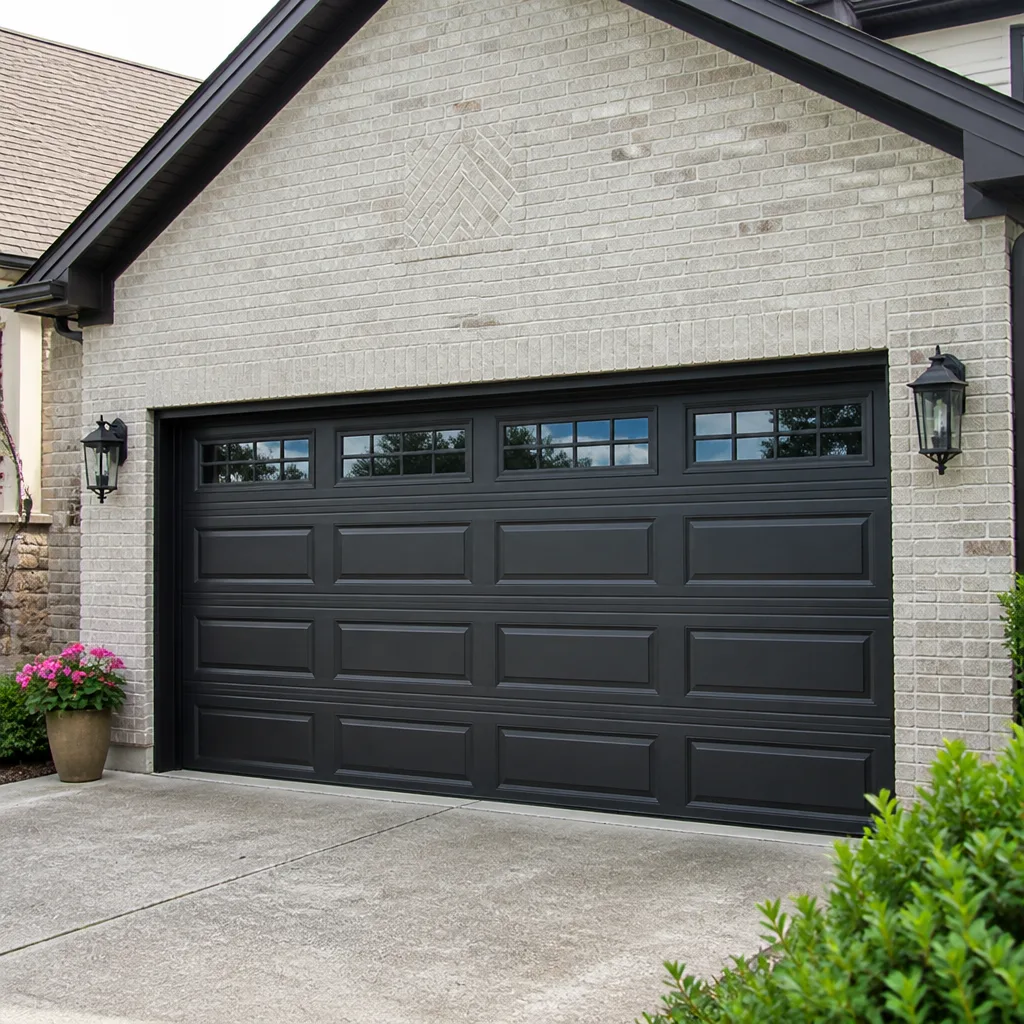 Raised-panel steel
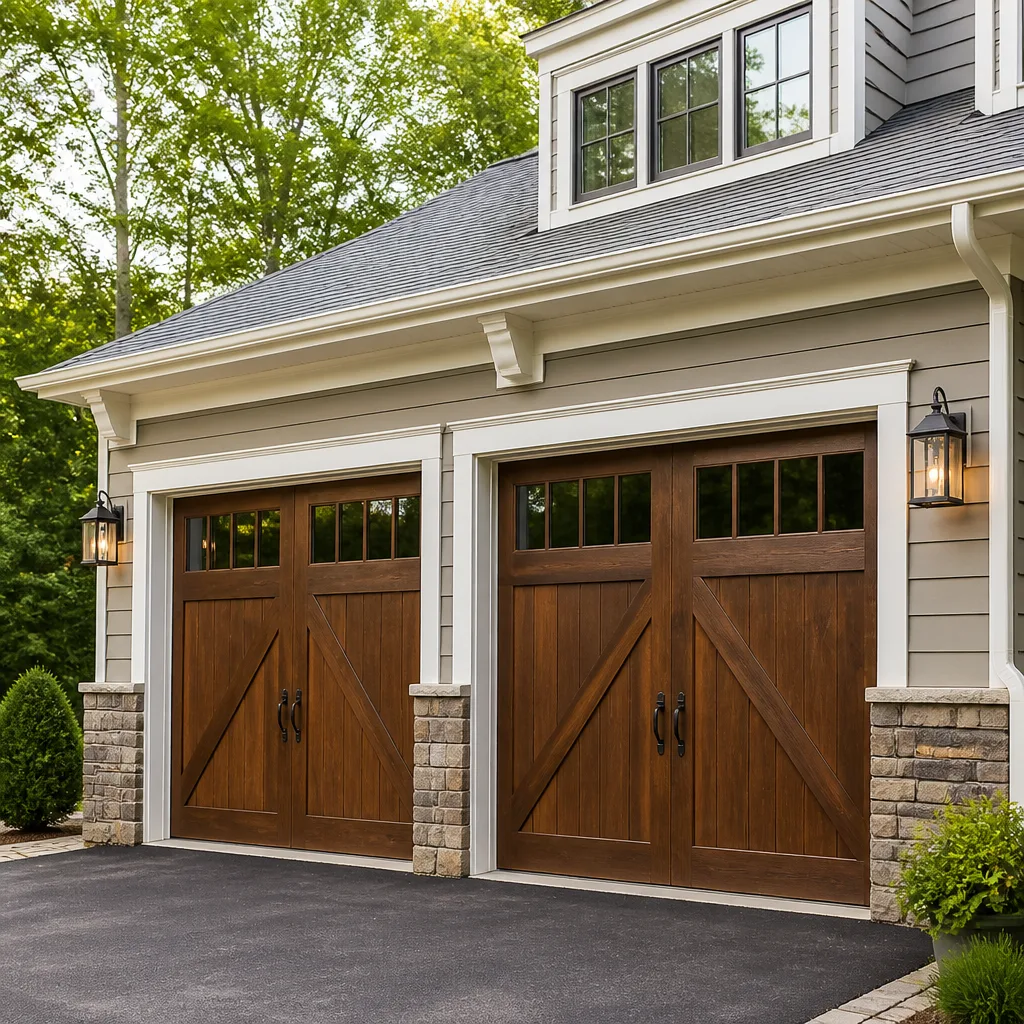 Carriage house
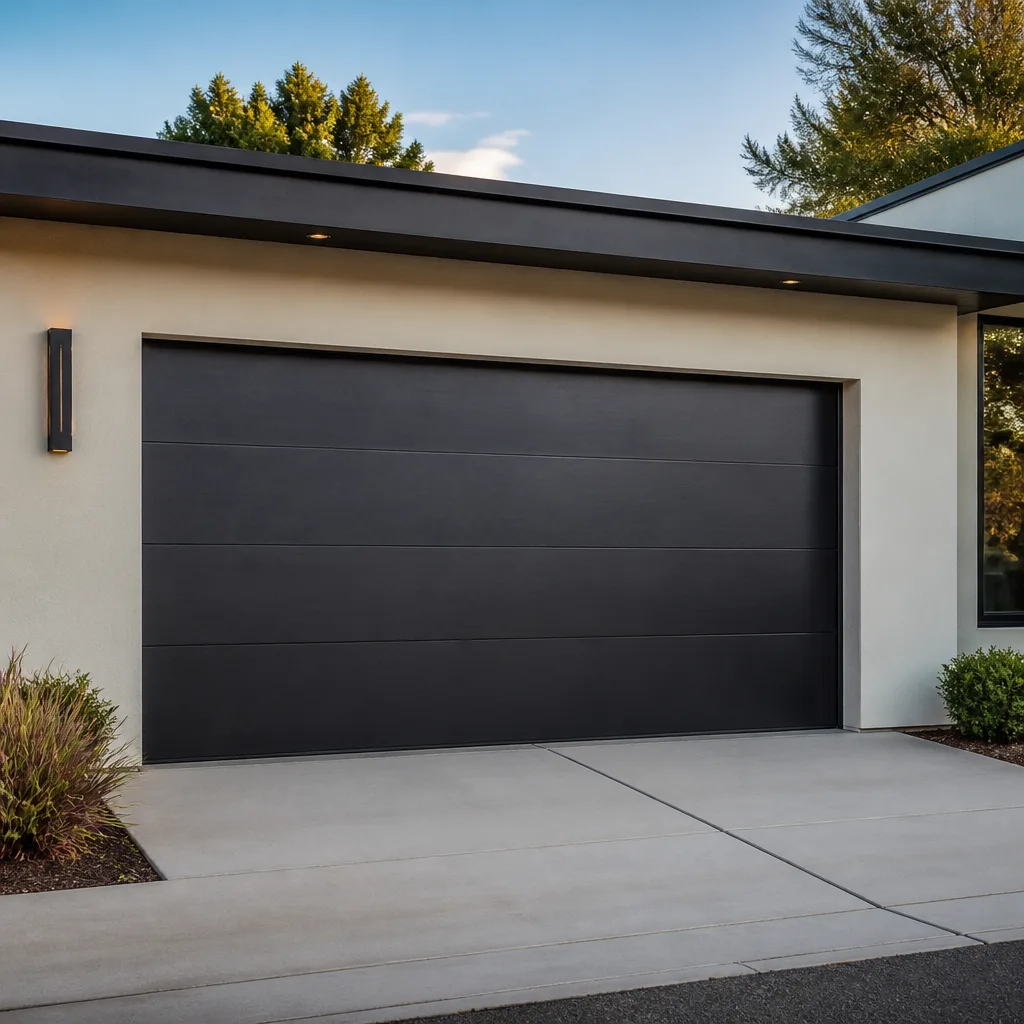 Modern flush
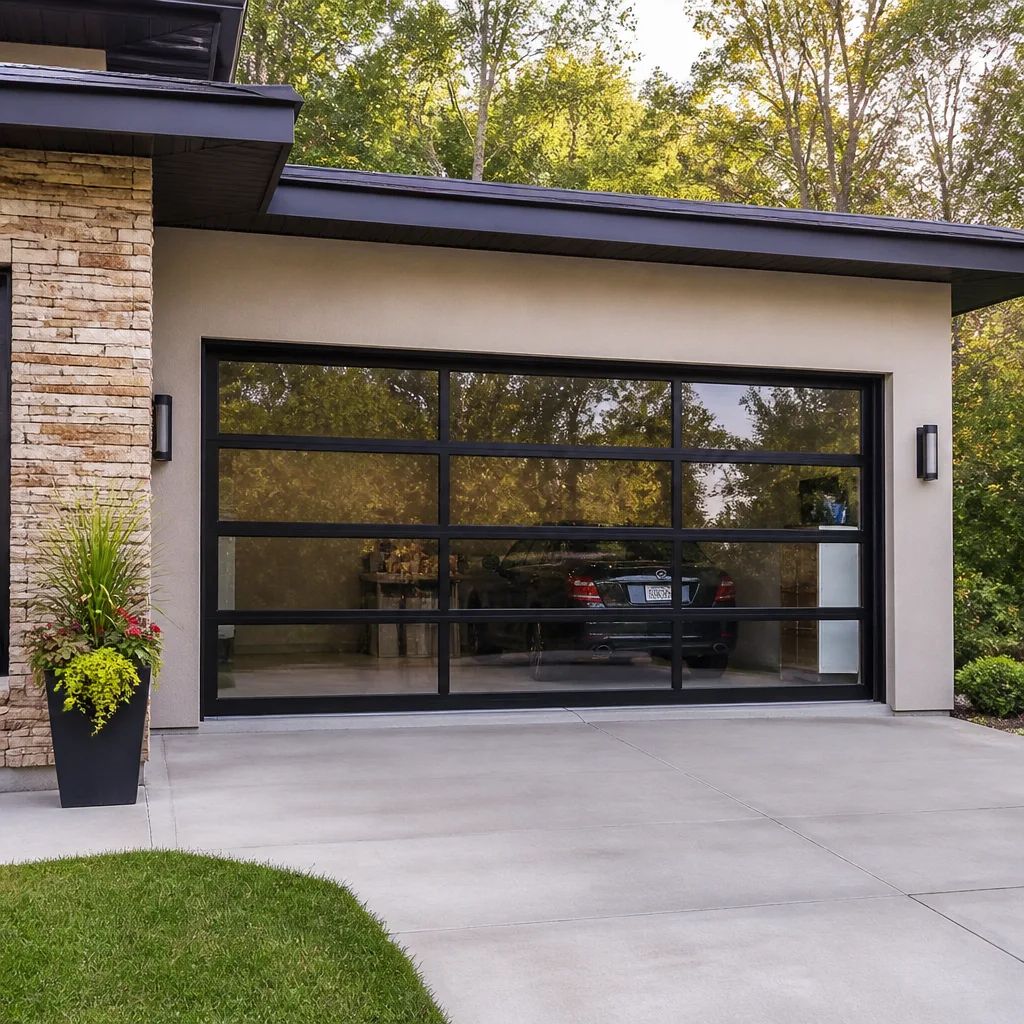 Full-view glass
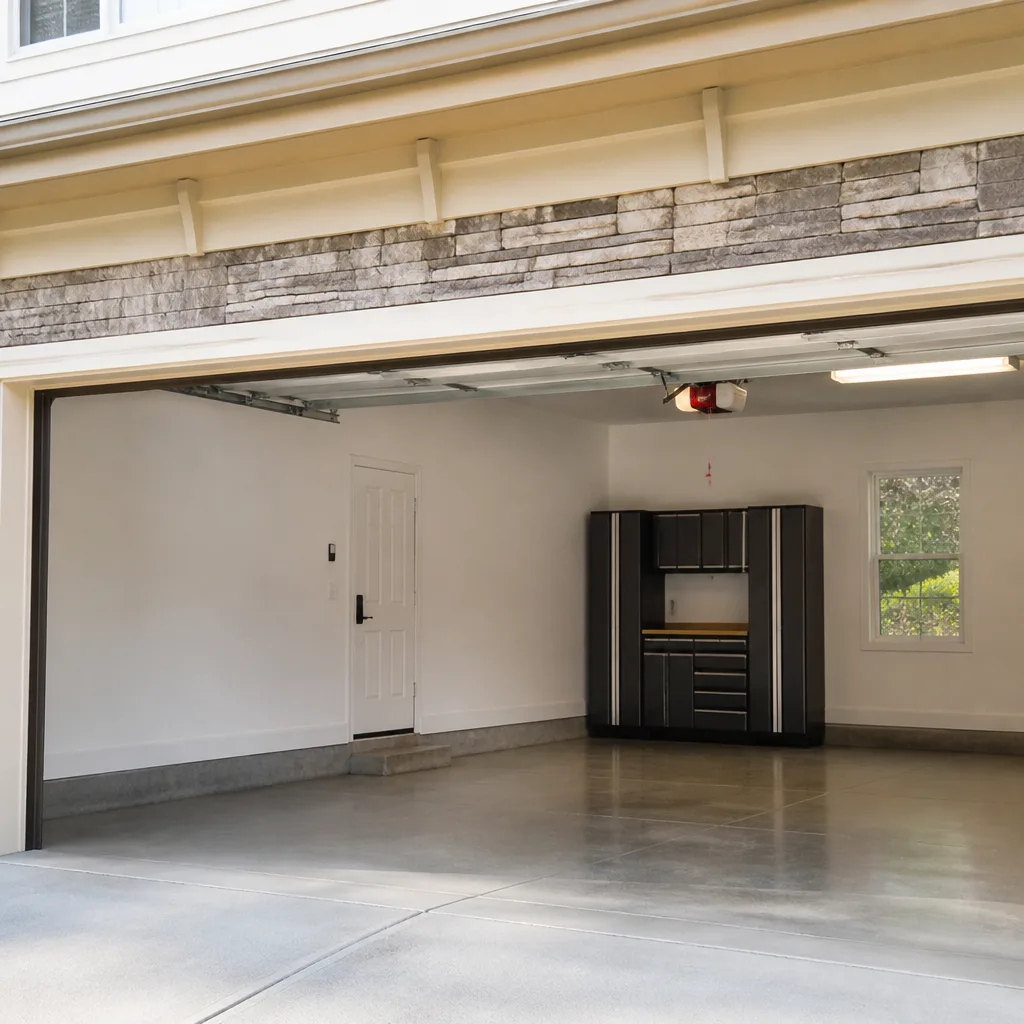 LiftMaster openers
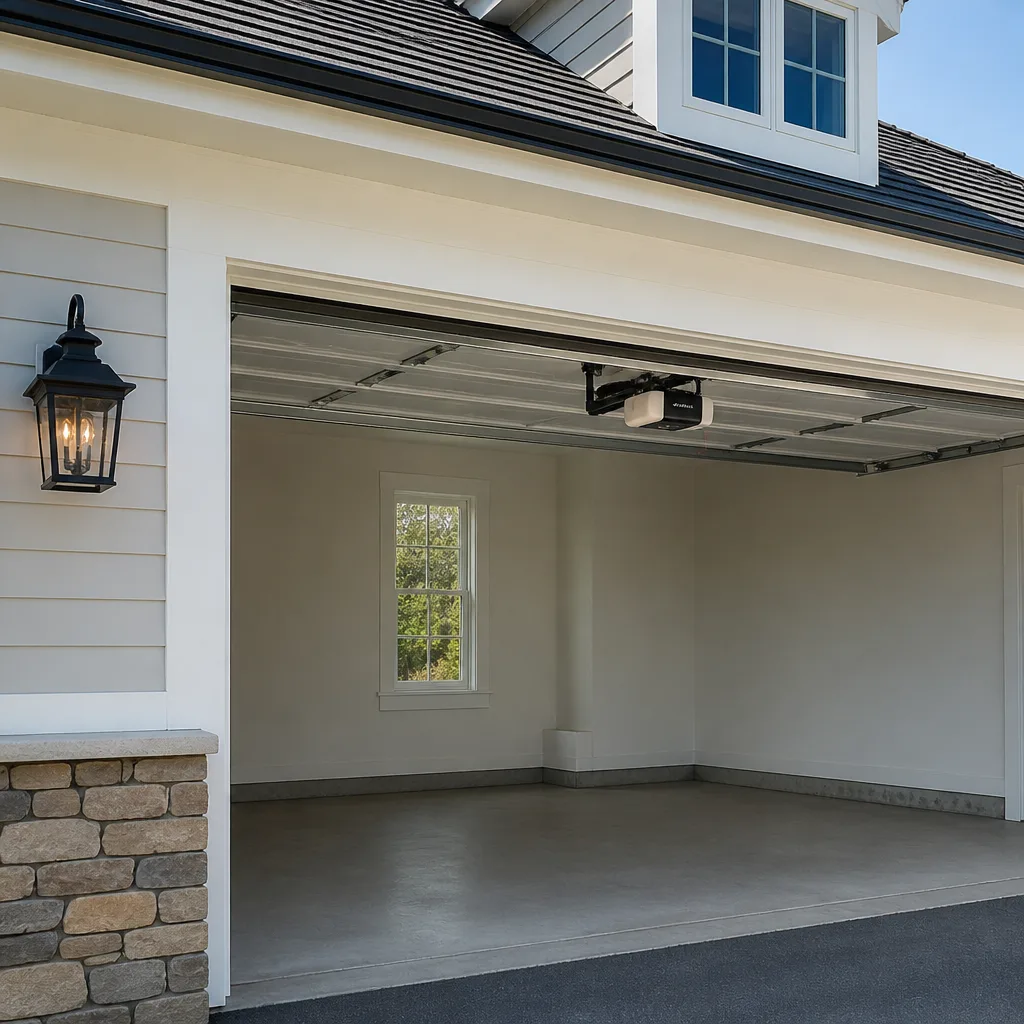 Chamberlain openers
Full 25-point door and opener safety check with every visit - springs, cables, rollers, tracks, and your LiftMaster or Chamberlain opener included
You get a price before we start. It does not change when the pro arrives.
Get your free estimateGarage Door Warning Signs: A University Park Homeowner’s Reference Guide
A grinding noise when the door opens sounds like a gear problem. It’s also a valid symptom of a worn cable drum, a dry trolley carriage, or a bent track – three different repairs with three very different price tags. That gap between what a symptom sounds like and what it actually means is where most garage door trouble starts. Misread the sign, and you spend a weekend treating the wrong part while the real failure keeps progressing out of view. This guide maps each symptom to its probable source system so you can tell when a noise is routine, when it’s urgent, and when to stop running the door entirely. University Park homeowners deal with a specific set of climate conditions that make this mapping even more useful.
Quick Answer
Garage door warning signs fall into three groups: sounds you shouldn’t ignore (grinding, snapping, popping), movement you shouldn’t ignore (uneven travel, jerky reversing, a door that hangs at the halfway point), and visual cues you can safely check from the floor (frayed cables, sagging panels, worn rollers, loose hinges). A symptom points to a specific subsystem – springs, cables, rollers, tracks, or opener – and the right response depends on which group the sign belongs to. If a cable is visibly frayed, a spring is visibly broken, or the door is hanging off-track, stop using it and call a professional before anything else.
Styles & brands we work with
- Raised-panel steel
- Carriage house
- Modern flush
- Full-view glass
- LiftMaster openers
- Chamberlain openers
Table of Contents
- The Symptom-to-Component Diagnostic Matrix
- Signs That Mean Stop Today vs. Signs That Allow a 30-Day Window
- Cold Mornings in University Park: False-Positive Symptoms
- What You Can Safely Check From the Floor (And What You Can’t)
- When a Warning Sign Becomes a Safety Risk
- How to Describe Symptoms Accurately When You Call
- Brand-Specific Warning Signs: How Your System Talks
- Repair vs. Replace: Reading the Accumulated Signs
The Symptom-to-Component Diagnostic Matrix
Every warning sign your garage door gives off corresponds to a specific component or small group of components. The trick is learning to separate the symptom from the source. Grinding, for example, is often filed under “the opener is going bad,” but opener gear wear and a worn cable drum produce nearly identical grinding sounds. What separates them is where the sound comes from and when you hear it. A dry trolley carriage grinds throughout the whole cycle; a worn opener gear grinds only during the lifting phase.
Here’s how the main symptoms map to probable sources. Use this as a diagnostic reference, not a diagnosis – but it will help you describe the problem accurately when you call, and it will help you know whether to panic.
- Grinding during the lift: worn opener drive gear, dry trolley carriage, or a worn bearing in the cable drum.
- Loud snap or bang (spring break): torsion spring has failed. The door will feel extremely heavy and one side may sag. Stop using it.
- Popping or banging at start or stop: loose hinges, worn rollers, or loose panel hardware.
- Rattling at speed: loose rollers in their track, loose bolts, or a worn opener chain.
- Door hangs at the halfway point: broken spring, worn cable, or a binding track.
- Uneven travel: stretched or frayed cable on one side, or a track misalignment.
- Door reverses immediately after closing: safety sensor obstruction, misaligned sensors, or a limit switch problem on the opener.
- Opener runs but door doesn’t move: stripped opener gear, broken spring, or a snapped lift cable.
- Door wobbles side to side: worn rollers, loose hinges, or bent track.
- Loud squeal on lift and return: dry bearing, dry rollers, or worn opener gear.
- Clicking when you press the remote: opener logic board or capacitor issue, not a mechanical fault.
- Door starts opening, then reverses: force-limit setting, obstruction, or a bound track.
You’ll notice several symptoms appear on more than one component. That’s the point – symptoms don’t map one-to-one to parts. A grinding noise is a valid symptom of a gear, a drum, a carriage, or a bearing, and the fix and the price range are different for each. A garage door repair technician with system-specific training reads the combination of symptoms, not any single one, when arriving on a call. That’s the value of having someone diagnose rather than guess.
Signs That Mean Stop Today vs. Signs That Allow a 30-Day Window
The single question that matters most when you notice a warning sign is this: can this wait, or is it dangerous right now? Splitting symptoms into “stop today” and “30-day window” tells you how to respond without overreacting or underreacting. In our experience, homeowners treat these categories too casually in both directions – panicking about a squeaky roller and ignoring a frayed cable.
Stop using the door today (call now):
- A loud bang followed by an extremely heavy door (broken torsion spring).
- A visibly frayed or snapped cable hanging on one side of the door.
- The door is visibly off its track – even a few inches.
- The door is sagging unevenly at one corner.
- The opener was pulled free and the door won’t close without force.
- A door that closes on an object and doesn’t reverse.
- Any door you can lift more than an inch or two by hand from the closed position.
Schedule repair within 30 days:
- Grinding or squealing on the lift, but the door still cycles fully.
- A single noisy roller or a loose hinge.
- A remote that works intermittently from close range.
- A door that hesitates before reversing, but does reverse.
- Weatherstripping worn thin or pulling away from the frame.
- Lights on the opener that flicker or don’t activate with the door.
- Slow travel on one side that doesn’t cause the door to bind.
The distinction isn’t about the cost of the repair. It’s about what can fail while you wait. A grinding roller is annoying; a grinding cable drum can lead to a snapped cable, and a snapped cable can drop a door. High-tension springs and cables carry enough stored energy to cause serious injury – they’re the one part of a garage door system that genuinely deserves caution. Do not try to adjust, tighten, or remove a spring or cable yourself. Call a trained professional.
Cold Mornings in University Park: False-Positive Symptoms
University Park’s cold mornings have a habit of making a healthy garage door sound like a dying one. Metal contracts in the cold, lubricants thicken, and rollers stiffen. A door that ran smoothly in October can hesitate, groan, or lag on a January morning without anything being wrong with it. This is where a lot of homeowners call for a repair they don’t need – or worse, start adjusting parts that weren’t broken.
Cold-morning symptoms that usually aren’t mechanical failures:
- Sluggish first cycle on a below-freezing morning that clears by the second or third open.
- A groan or squeak that goes away once the door has been run once.
- Slow reversing when the safety sensors are cold (some sensor LEDs dim in low temps).
- An opener that hesitates to start on the first press, then runs fine.
- Stiff weatherstripping that drags slightly on the door edge.
If a symptom shows up on a cold morning and disappears completely by mid-day, it’s a temperature effect, not a failure. If a symptom shows up on every cycle regardless of temperature, it’s mechanical. If a symptom gets worse as the morning warms up – which happens with dry rollers – it’s a lubrication issue you can usually address by having the rollers and hinges serviced.
The false-positive pattern is important enough to mention because it affects how University Park homeowners describe their problem. “It’s always slow in the morning” often turns out to be cold-weather stiffness, not a failing opener. A technician who knows to ask about temperature and time-of-day will diagnose this in minutes. A generalist may replace a part that was fine.
What You Can Safely Check From the Floor (And What You Can’t)
Not every diagnostic step requires a ladder. Some of the most useful warning signs are visible from standing on the garage floor, and checking them takes about two minutes. Other checks are genuinely dangerous and belong to a trained technician. Knowing the difference keeps you safe and helps you report the problem accurately.
Safe to check from the floor:
- Look at the springs above the door (torsion) or along the sides (extension). A visible gap in a torsion spring means it’s broken – stop there and call.
- Look at the cables running down each side. Frayed strands, kinks, or a slack cable mean it needs professional attention.
- Look at both safety sensors near the floor at each side of the door. A blocked or misaligned sensor is the most common cause of a reversing door.
- Look at the rollers from the side. Flat spots, cracks, or visible wear on the roller face are worth reporting.
- Look at the hinges where panels meet. Loose screws or bent hinge plates are visible without touching anything.
- Look at the bottom seal. If it’s torn, sagging, or leaving gaps, that’s a straightforward replacement.
- Look at the door panels from a few feet back. Any panel that’s out of line with its neighbors signals a track or hardware issue.
Do not check on your own:
- Anything requiring loosening, tightening, or removing a spring or cable.
- Track alignment adjustments – a bound track under tension can snap back.
- Opener rail adjustments or force-limit recalibration on a door you can’t safely operate.
- Anything requiring you to stand on a ladder under the door’s travel path.
- Releasing the manual disconnect on a door with a broken spring – it can drop.
The safe checks give you a real head start. When you call, being able to say “the left torsion spring has a visible gap” or “the cable on the right side is frayed about a foot up from the bottom bracket” is worth more than any amount of description like “it’s making a noise.” That’s the information that cuts diagnosis time in half.
When a Warning Sign Becomes a Safety Risk
Some warning signs are about repair cost. Others are about safety. The distinction matters because garage doors are the largest moving object in most homes, and some of their components – springs and cables especially – store enough energy to cause serious injury. A garage door that’s giving the wrong sign shouldn’t be operated while you sort out the repair.
Treat the door as unsafe to operate if any of these are true:
- A spring has snapped (visible gap, loud bang, door suddenly very heavy).
- A cable is frayed, kinked, or hanging loose.
- The door is off its track, even slightly.
- The door is sagging at one corner or visibly unbalanced.
- The opener’s safety reverse doesn’t work (test with a small object flat on the ground under the door).
- The door can be lifted by hand from the closed position.
In any of those cases, keep the door closed, don’t force it, and call for service. If the door is stuck open and you need to secure the house, the manual release (usually a red cord) can be used to disengage the opener – but only if the door isn’t already sagging or off-track. If the door is off-track or one side has dropped, leave the door where it is and call.
Spring repair is a safety job, not a DIY job. Torsion springs are under significant tension, and the tools and technique required are specific. A trained technician brings the right winding bars, the correct replacement spring for your door’s size and weight, and the knowledge to test the balance afterward. This isn’t a case where watching a video closes the gap. It’s the one part of a garage door system where we consistently tell homeowners: don’t.
How to Describe Symptoms Accurately When You Call
The half-hour you save by documenting your door’s symptoms accurately is worth more than any description like “it’s broken.” Technicians diagnose from a combination of sounds, timing, and location – and homeowners who report those three things get a faster diagnosis and a more accurate quote.
Before you call, write down (or at least know) these seven things:
- What the door does: Does it open fully? Does it open partly and stop? Does it reverse? Does the opener run but the door stay still?
- What you hear: Grinding, squealing, clicking, banging, snapping, rattling, humming. Note when in the cycle the sound happens (lift, close, both, start only, stop only).
- Where the sound comes from: Above the door (springs), at the top of the tracks (cable drums), at the opener motor (rail or head), or at the door panels (hinges, rollers).
- When it happens: Every cycle, only in cold weather, only after a power outage, only on the first use of the day.
- Whether it’s temperature-dependent: Does the symptom improve or worsen as the morning warms up? This eliminates about a third of false-positive calls.
- Why you’re calling: “It sounds like it’s dying” is fine. “It’s grinding on the lift but runs fine downhill” is better.
- Make and model if visible: LiftMaster, Chamberlain, Genie, Craftsman, or the opener model number printed on the head unit. Same for the door if there’s a manufacturer label on the inside of a panel – Amarr, Clopay, Wayne Dalton, and Raynor labels are fairly common on University Park doors.
That last point is worth its own section. Manufacturer and model knowledge changes what parts a technician brings and how a repair is planned. That’s why we work on the specific mechanics of the major opener and door brands – Amarr, Wayne Dalton, Craftsman, Raynor, LiftMaster, Chamberlain, Genie, and Clopay – so the diagnosis that begins on the phone has a chance of ending in a single visit.
Brand-Specific Warning Signs: How Your System Talks
Different garage door and opener brands communicate wear through slightly different signals, and knowing your brand helps you interpret the signs. That’s not a marketing point – it’s mechanical. LiftMaster and Chamberlain systems (which share a lot of internal design) tend to show opener gear wear as a grinding that gets progressively louder before the door stops. Genie units, particularly older chain-drive models, often show wear as a rattle that leads to a slow lift. Craftsman openers from the legacy line commonly signal logic board issues as flickering lights or remotes that work only close to the unit.
On the door side, Amarr and Wayne Dalton panels tend to be sensitive to track misalignment – a sag in one panel follows quickly. Raynor and Clopay doors tend to show roller and hinge wear before panel issues. None of that changes the safety rules; it changes which parts a technician brings and how quickly they get to the right one.
What brand awareness doesn’t do is replace a physical diagnosis. Even if we know the brand and the symptom, the door still needs to be tested in person – balance, force, travel, and reverse. The brand knowledge just means the first visit has a better shot at being the last one. Right part, right visit.
Repair vs. Replace: Reading the Accumulated Signs
One warning sign points to a repair. Half a dozen signs on the same door point to a decision. Homeowners ask us that question a lot in University Park, and the honest answer depends on the age of the door, the number of independent failures, and whether the hardware is still serviceable. Here’s how we think through it.
Signs that favor repair:
- A single component failure (one spring, one cable, one opener gear) on a door with otherwise sound panels and track.
- Occasional noise from rollers or hinges that improves with lubrication.
- An opener issue on a door that balances and reverses correctly.
- A worn weather seal, bottom seal, or set of rollers.
- A door whose manufacturer still supplies its hardware, whether that’s Amarr, Clopay, Wayne Dalton, or Raynor.
Signs that favor replacement:
- Multiple panels are rusted through, cracked, or bent beyond safe alignment.
- The track itself is bent in more than one place.
- The door is consistently unbalanced even after spring replacement.
- Repeated opener failures on the same unit within a short window.
- Hardware is no longer available for the door’s specific model.
If you’re in the second group, a new door is usually the right move – not because a repair is impossible, but because repeated small repairs cost more than a single replacement over time. That’s a decision to make with a written estimate in hand, not on the phone. For a full new door or a major hardware change, garage door installation measurements and a written price come first. Same-day language doesn’t apply to installation work – that’s measured, ordered, and scheduled.
Common Mistakes to Avoid
- Treating a symptom without finding the source. Lubricating a squeak that’s actually a worn bearing hides the noise but doesn’t stop the wear. Two weeks later the same noise returns with a bigger bill attached.
- Assuming the opener is the problem. A door that won’t open is more often a broken spring or cable than a failed opener. Replacing the opener first is a common and expensive wrong turn.
- Ignoring a cold-morning symptom that never clears. A hesitation that disappears by mid-day is temperature. One that hangs around after the third cycle is mechanical. University Park winters produce a lot of both, and the distinction decides whether a repair is needed.
- Running an off-track door “just until the technician gets here.” Every cycle pushes a bent track further out of alignment and stresses the rollers. The fix that would have been a track adjustment becomes a track replacement.
- Calling without knowing the brand or model. On a multi-brand system, model number is the single most useful piece of information you can provide. It cuts down return visits for parts.
- Letting a 30-day symptom drift into a six-month one. A grinding roller that gets ignored for a season can wear the track. The repair expands while you wait.
- Letting a well-meaning neighbor “have a look.” Springs and cables aren’t DIY. A neighbor with a wrench near a torsion spring is one of the more common causes of home garage injuries. Call a technician.
- Mistaking a temperature effect for a failure and paying for a repair you didn’t need. We’ve seen plenty of openers replaced in University Park that only needed a seasonal roller service.
See the difference
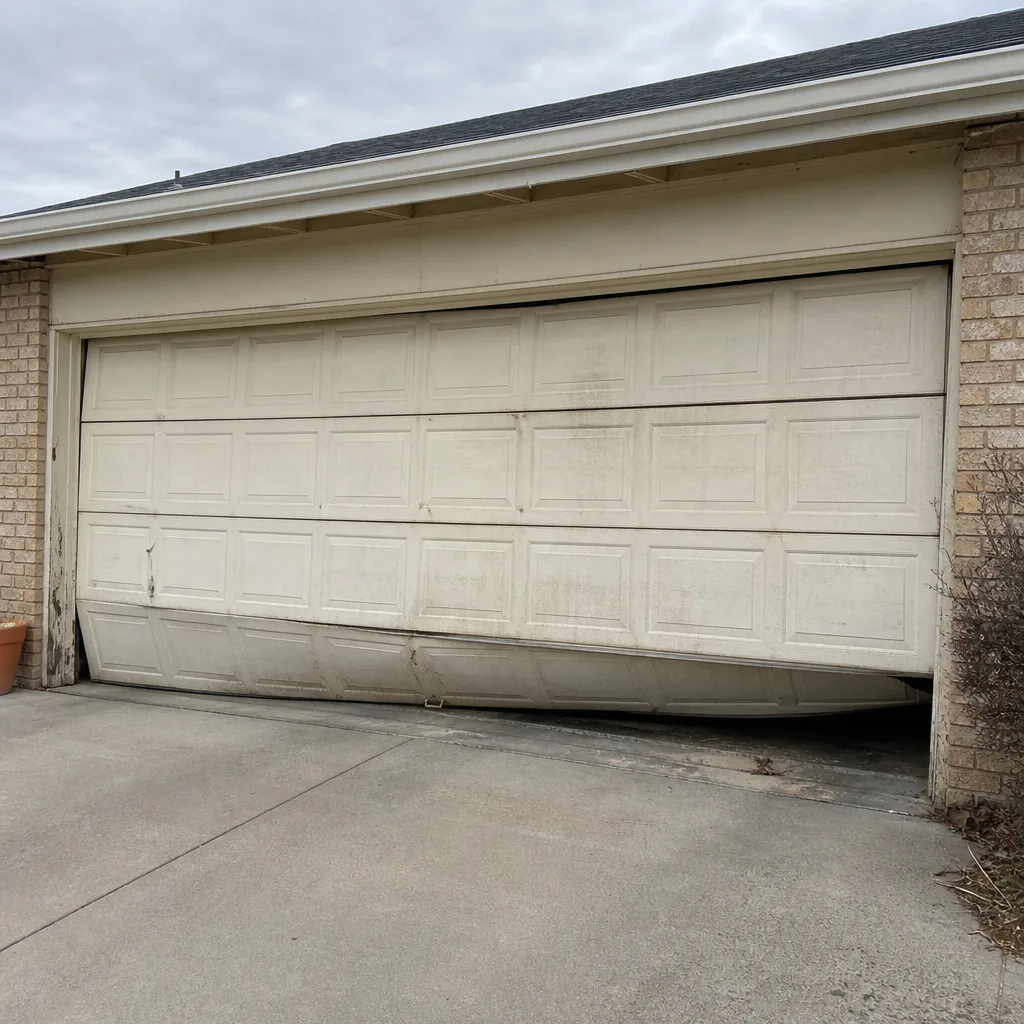 Before
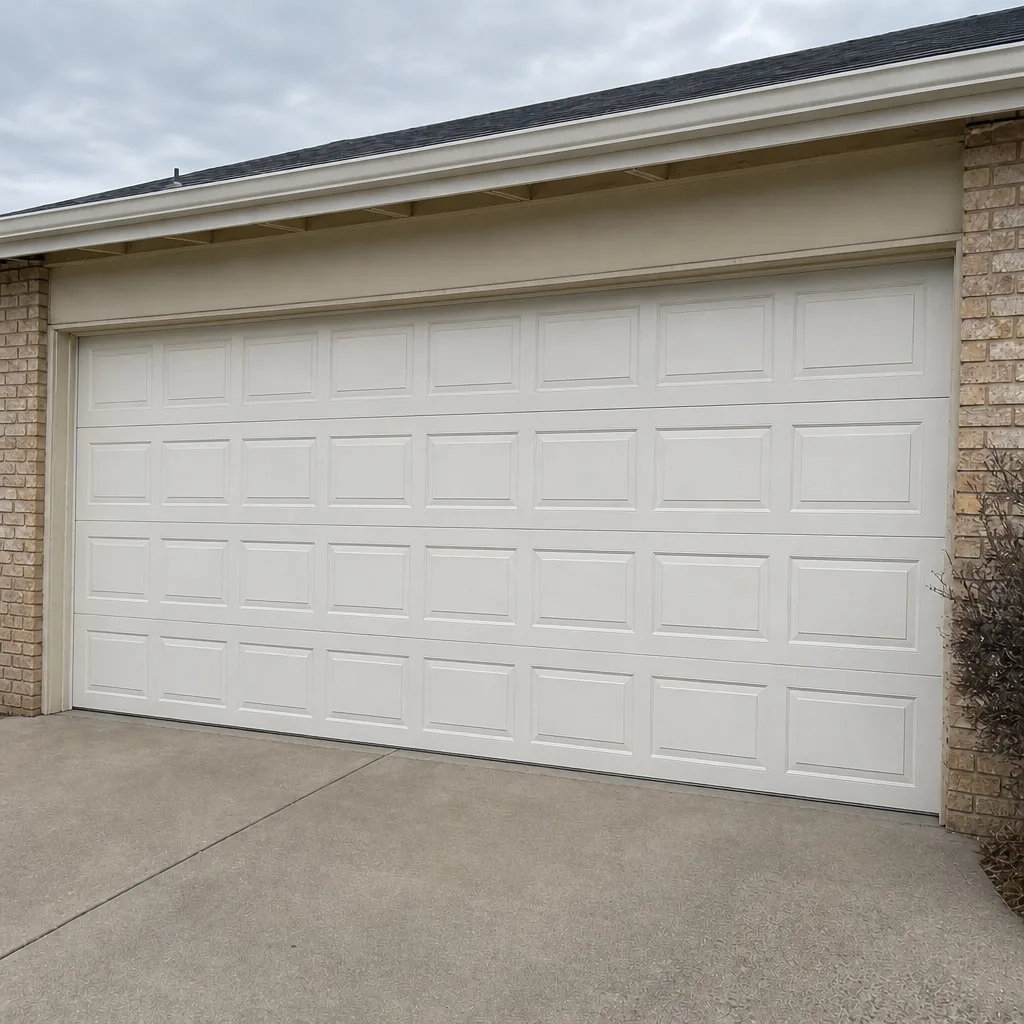 After
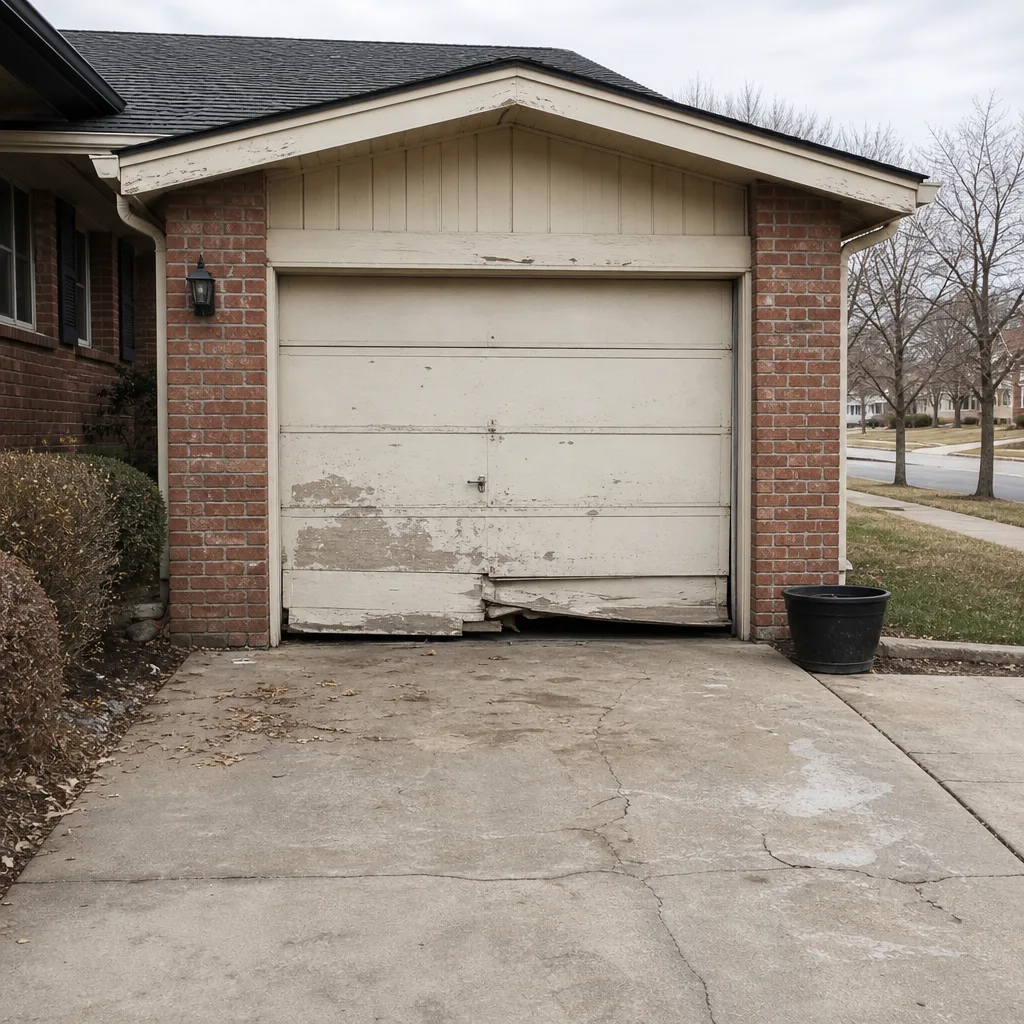 Before
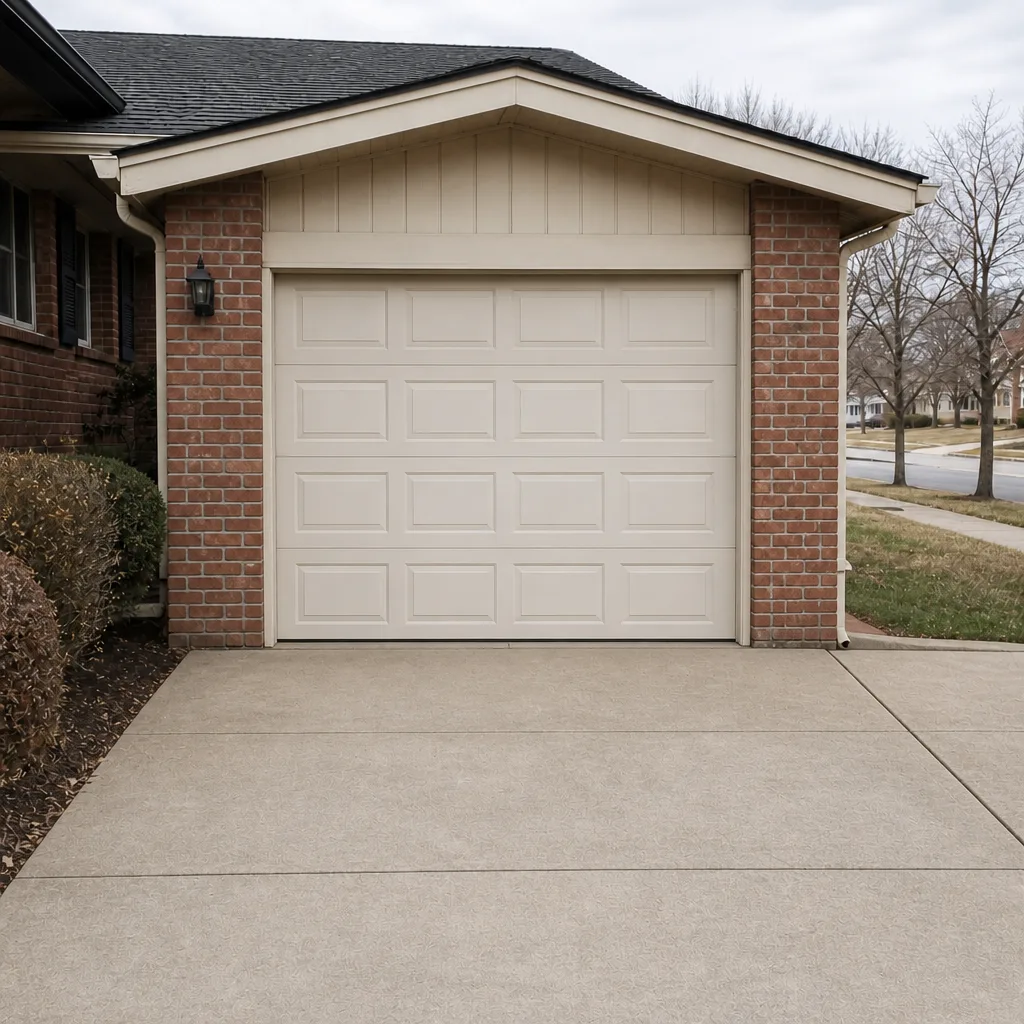 After
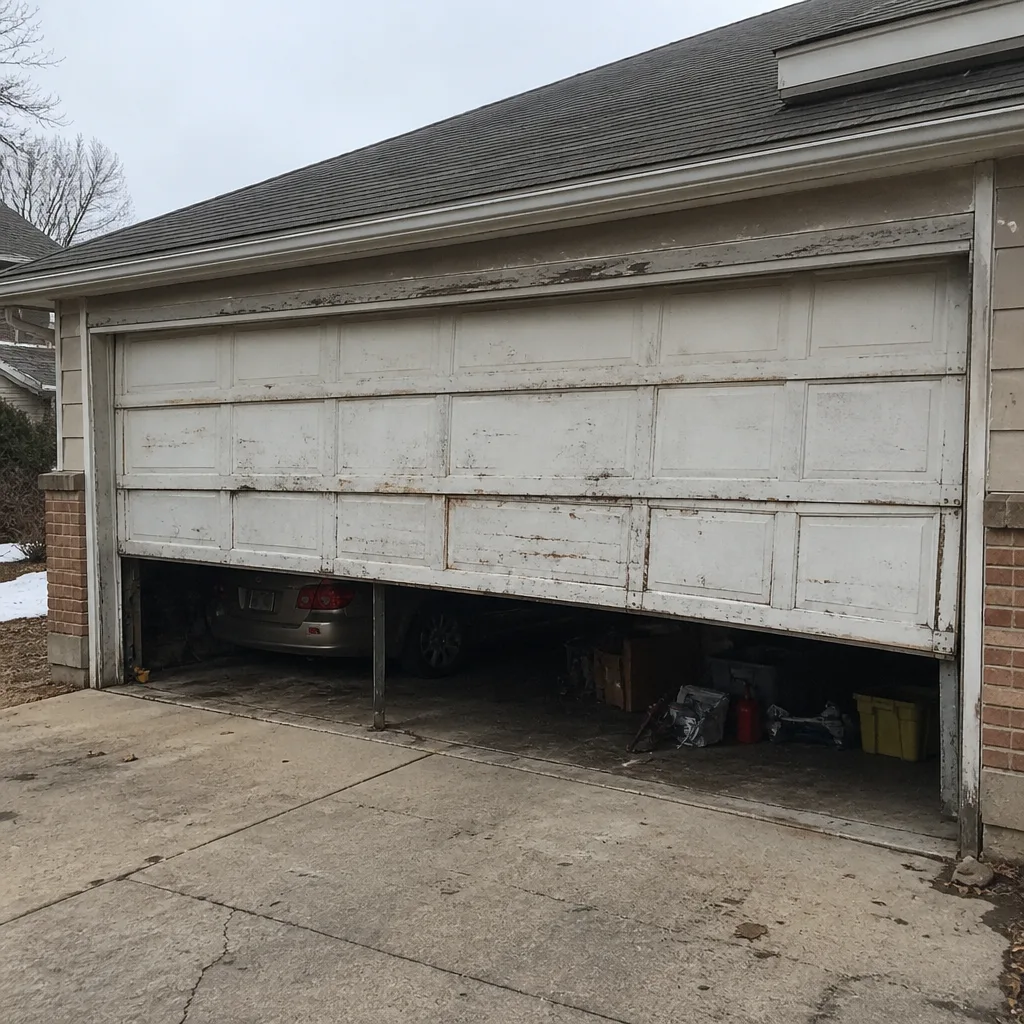 Before
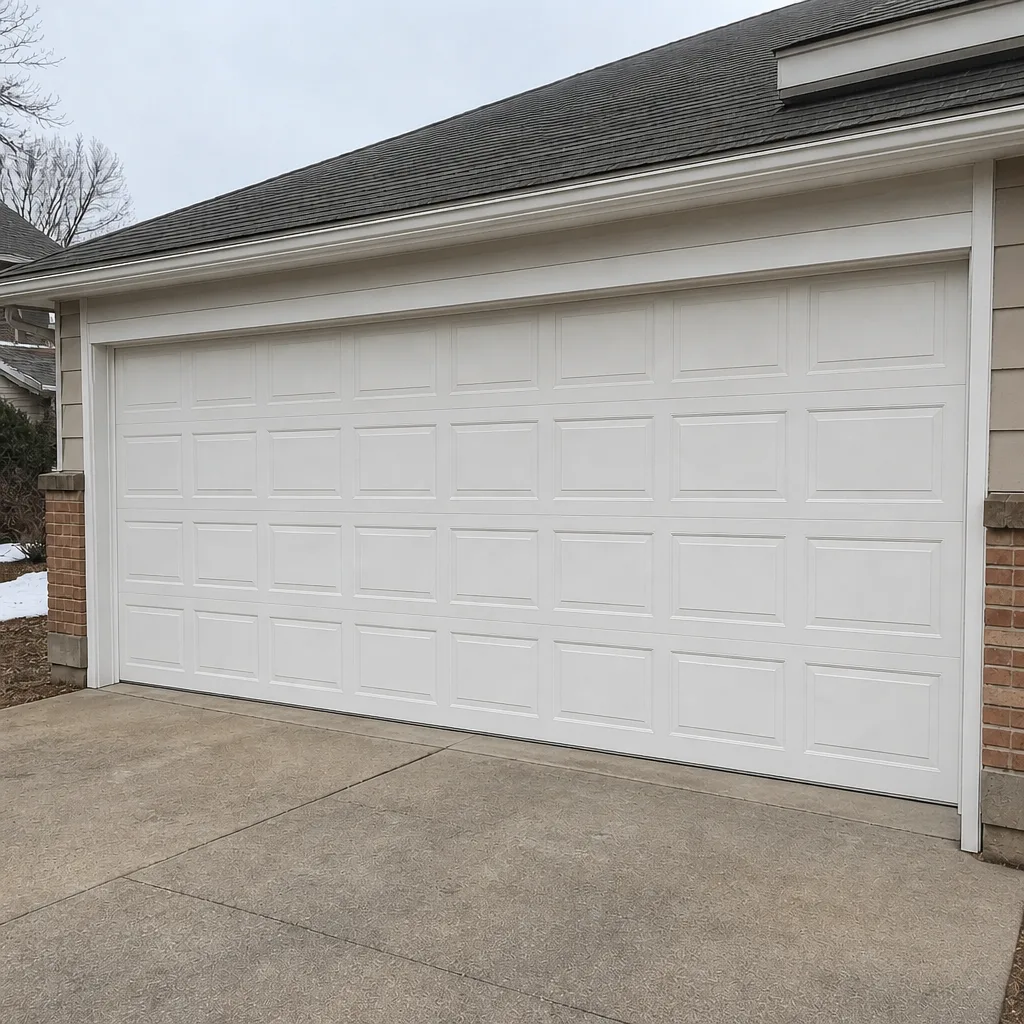 After
When to Call a Professional
Call a professional the moment a warning sign falls into the “stop today” list. That means: a broken spring, a frayed or snapped cable, an off-track door, a sagging panel, a door you can lift by hand, or a safety reverse that fails. Those are safety issues, not scheduling issues – and the door should stay shut until they’re addressed. Also call when a 30-day symptom is getting worse, when you’ve had repeated repairs on the same door, or when you’re unsure which category a symptom belongs to. There’s no penalty for calling on something that turns out to be minor. There’s a real penalty for the reverse. University Park Garage Door Repair Pros offers free estimates in University Park – call (844) 524-3396. For our main repair line, see garage door repair – and for opener-related symptoms, garage door opener repair is the specific service page.
Frequently Asked Questions
The most common signs we hear about are grinding on the lift, a door that hesitates before reversing, and a squeal that shows up on cold mornings. Grinding usually points to a worn opener gear or a dry cable drum. A hesitating reverse is usually safety sensors or a limit setting. A cold-morning squeal is often temperature-related stiffness that improves once the door cycles. Call (844) 524-3396 for a free estimate if any of those persist past a few cycles.
Not always, but it’s worth checking. Grinding during the lift from the opener head is usually a worn drive gear – annoying, but not dangerous. Grinding from above the door can signal a worn bearing or cable drum, and those can lead to a snap if ignored. Stop using the door if the grinding is accompanied by any visible sag, uneven travel, or heaviness when you lift it by hand. Call a trained professional rather than trying to diagnose the source yourself.
A loud, sharp bang – often described as sounding like a gunshot or a heavy dropped object from inside the garage. It’s followed by an extremely heavy door, and often a visible gap in the spring above the door (torsion) or a loosened spring along the side (extension). Stop using the door immediately and call. Spring repair is a safety job, and high-tension springs store enough energy to cause serious injury. Call (844) 524-3396 for a free estimate.
Yes, and University Park winters produce plenty of them. Cold thickens lubricants, stiffens rollers, and contracts metal, so a door that was smooth in summer can groan, hesitate, or lag on the first cycle of a cold morning. If the symptom clears by the second or third cycle, it’s usually temperature. If it persists after the door is warm, it’s mechanical. The difference decides whether you need service or a lubrication tune-up.
Have five things ready: what the door actually does during a cycle, what sound it makes and when, where the sound comes from, whether it’s temperature-dependent, and the opener or door brand and model if you can see it. Brand and model are especially useful on multi-brand systems. Amarr, Wayne Dalton, Craftsman, Raynor, LiftMaster, Chamberlain, Genie, and Clopay doors and openers each have specific wear patterns, and knowing yours helps the technician bring the right parts. Call (844) 524-3396 for a free estimate.
It depends on how many independent problems the door has. A single component failure on an otherwise sound door is almost always a repair. Multiple issues on a door with cracked panels, bent track, or unavailable hardware point to replacement. The difference is best judged with a written estimate in hand. Call (844) 524-3396 for a free estimate and a clear recommendation – not a sales pitch for a new door when a repair will do.
The Bottom Line
Garage door warning signs are mechanical communications, not just noise. Read them wrong and you treat a symptom while the real failure progresses. Read them correctly and you know within a minute or two whether to stop using the door, schedule a repair within the month, or let the cold-morning stiffness pass. Use the diagnostic matrix, stick to the safe visual checks, and describe your symptoms with the detail that shortens a technician’s diagnosis. In University Park, that’s the difference between one visit and three. When in doubt, call. The estimate is free.
University Park Garage Door Repair Pros works on the major opener and door brands – LiftMaster, Chamberlain, Genie, Clopay, Amarr, Wayne Dalton, Craftsman, and Raynor – so the diagnosis you get on the phone has a real chance of being the repair you get on the visit. Our technicians have up to 11 years of experience, spring repair is handled as a safety-critical specialty, and parts are sourced across brands so a missing component doesn’t turn into a return visit. If a warning sign has you unsure, University Park Garage Door Repair Pros is the number you want in the phone, whether the fix is a spring, a roller, an opener, or a full new door. Call (844) 524-3396 for a free estimate and let’s read the signs together.
Written by the team at University Park Garage Door Repair Pros.